How I Built My Emergency Fund While Forecasting Market Shifts
What if your emergency fund could do more than just sit idle? I used to think it was enough to stash cash and forget it—until a market swing changed everything. Learning to balance safety with foresight transformed my financial mindset. This is how I strengthened my emergency fund while staying ahead of economic shifts, blending caution with smart preparation—no hype, just real steps that work. It wasn’t about chasing returns or timing the market perfectly. It was about recognizing that even the most conservative parts of my financial life could benefit from awareness. Inflation, interest rates, and economic cycles don’t pause just because my savings are meant to be safe. Once I accepted that, I began to see my emergency fund not as a static cushion, but as a dynamic part of my overall financial health—one that could be protected, preserved, and even slightly enhanced with the right approach. This journey didn’t require complex tools or risky bets. It started with a simple shift in thinking: safety and awareness aren’t opposites. They can—and should—work together.
The Wake-Up Call: Why My Emergency Fund Felt Useless
For years, I followed the standard advice: save three to six months of living expenses, keep it in a savings account, and leave it untouched. I did exactly that. I built up a balance that felt substantial—enough to cover rent, groceries, insurance, and a few unexpected repairs. I told myself I was responsible. But then, I started noticing something unsettling. The balance wasn’t shrinking, but its real value was. Inflation was rising, interest rates on my account were near zero, and I realized that if I ever needed to use that money, it would buy less than it did when I saved it. That was the wake-up call. My emergency fund wasn’t losing money in dollars, but it was losing purchasing power. It wasn’t truly safe—it was silently eroding.
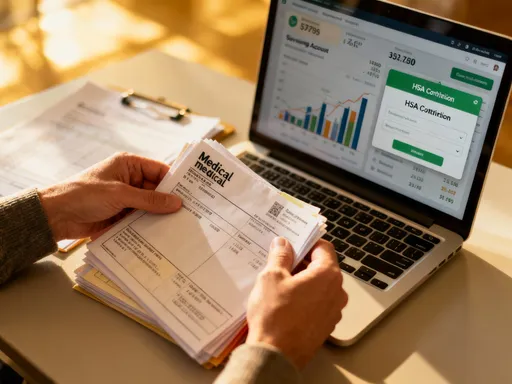
This realization came during a period of economic uncertainty. I remember reading headlines about supply chain issues, wage increases, and rising grocery bills. At the same time, I had a minor medical procedure that wasn’t fully covered by insurance. When I paid the bill, I used part of my emergency savings. Later, when I replenished it, I noticed how much more it cost to replace what I had spent. That’s when it hit me: my savings weren’t keeping pace with reality. The traditional model of an emergency fund—purely liquid, purely safe, completely isolated from market awareness—was incomplete. It protected against job loss or car trouble, but not against the slow, invisible drain of inflation. I wasn’t alone in this. Studies have shown that over the past decade, the average return on traditional savings accounts has lagged behind inflation, meaning millions of people are unknowingly losing ground even as they follow the rules.
The psychological impact was just as significant. I had always thought of my emergency fund as a source of security. But now, that security felt fragile. I was doing everything right, yet my money wasn’t truly protected. That dissonance sparked a deeper question: if I’m already saving diligently, why should I accept a loss in value? Why couldn’t I apply some level of awareness to this part of my finances without compromising safety? I didn’t want to gamble, but I also didn’t want to be passive. I began to research how people balance liquidity with preservation, and how market conditions could inform—not dictate—decisions about where and how to hold emergency funds. This wasn’t about becoming a financial expert overnight. It was about refusing to accept that safety means stagnation.
Rethinking the Safety Net: What an Emergency Fund Should Really Do
Once I acknowledged the limitations of my old approach, I had to redefine what an emergency fund is for. Its primary role isn’t to grow. It’s to be there when you need it—immediately, fully, and without risk of loss. That hasn’t changed. But I realized that fulfilling that role in today’s economy requires more nuance than simply parking money in a standard savings account. A modern emergency fund must balance three key functions: liquidity, stability, and inflation resilience. Liquidity means the money is accessible within days, if not hours. Stability means the principal is protected from market volatility. Inflation resilience means the fund doesn’t lose value over time due to rising prices. The first two are well understood. The third is often overlooked, but it’s increasingly critical.
In the past, when inflation was low and savings account interest rates were higher, the erosion of purchasing power wasn’t a major concern. But in recent years, that has shifted. Central banks have responded to economic cycles with fluctuating interest rate policies, and consumer prices have become more volatile. This means that even if your emergency fund is technically safe, it may not be truly effective. I began to look at alternative places to hold my emergency savings—accounts and instruments that offered better returns without sacrificing security. High-yield savings accounts, money market funds, and short-term certificates of deposit became part of my consideration. These options aren’t investments in the traditional sense. They don’t promise high returns, and they aren’t tied to the stock market. But they do offer slightly better yields, which can make a meaningful difference over time.
What changed most was my mindset. I stopped seeing my emergency fund as a financial afterthought and started treating it as a strategic reserve. That doesn’t mean I started analyzing charts or reading economic forecasts every morning. It means I built a framework for making informed decisions. For example, I set a rule: no more than 10% of my emergency fund would ever be in anything less liquid than a savings account. I also decided that I would only consider yield improvements if they didn’t compromise access or safety. This allowed me to upgrade from a 0.01% interest account to one earning 4% annually—without taking on risk I wasn’t comfortable with. The key was understanding that small improvements, when applied consistently, can preserve value over time. An emergency fund doesn’t need to generate wealth. It just needs to maintain it.
The Forecasting Edge: Seeing Risk Before It Hits
One of the most powerful shifts in my financial approach was learning to pay attention to market signals—not to predict the future, but to prepare for it. Market forecasting often sounds like something only professionals do, involving complex models and speculative bets. But at its core, it’s about observing trends and adjusting behavior accordingly. For me, this meant learning to read basic economic indicators and understanding what they might mean for my savings. I didn’t start trading or investing based on these signals. I used them to protect what I already had.
One of the first indicators I began tracking was the yield curve. When short-term interest rates rise above long-term rates—a phenomenon known as an inverted yield curve—it has historically preceded economic downturns. I didn’t interpret this as a reason to panic or sell everything. But when I saw signs of inversion, I took it as a cue to prioritize capital preservation. I moved more of my emergency fund into FDIC-insured accounts and reduced any exposure to slightly riskier instruments, even if they offered higher yields. Similarly, I started paying attention to inflation reports. When the Consumer Price Index showed sustained increases, I knew that my savings were under pressure. That didn’t mean I withdrew money or made drastic changes. It meant I accelerated my shift to higher-yielding savings options and paused any plans to lock money into long-term CDs if rates were likely to rise further.
I also began following consumer sentiment and employment data. These don’t directly affect my emergency fund, but they give me a sense of broader economic health. If job losses are rising or consumer spending is declining, I know that economic stress could be on the horizon. That doesn’t change my need for an emergency fund—it reinforces it. But it does influence how I manage it. For example, during periods of high uncertainty, I ensure that 100% of my emergency savings are in fully liquid, government-insured accounts. I don’t try to outsmart the market. I just make sure I’m not caught off guard. The goal isn’t perfection. It’s preparedness. By using these signals as early warnings, I’ve been able to make small, timely adjustments that protect my fund without overreacting to every headline.
Matching Strategy to Scenario: How I Adjust My Fund Based on Outlook
With a better understanding of market conditions, I developed a simple but effective framework for adjusting my emergency fund. It’s not a rigid formula, but a set of guidelines that help me respond to changing environments. The core principle is alignment: my fund’s structure should match the current economic outlook. When conditions are stable and interest rates are favorable, I can afford to seek slightly better yields. When uncertainty rises, I prioritize safety and access above all else.
For example, during a period of economic growth and rising interest rates, I might allocate a portion of my emergency fund to short-term CDs or treasury bills. These offer higher returns than standard savings accounts and are still low risk. I only do this when I’m confident that I won’t need the money during the lock-up period, and I never put more than a third of my fund in such instruments. This allows me to earn more without compromising my ability to respond to emergencies. I also use this time to review and rebalance, ensuring that my allocations still meet my liquidity needs.
Conversely, when economic indicators suggest a potential downturn—such as rising unemployment or declining consumer confidence—I shift back to maximum liquidity. I move all funds into high-yield savings accounts or money market accounts that offer instant access and full FDIC or NCUA insurance. I also make sure I have enough cash readily available to cover at least two months of expenses in my primary checking account, just in case digital access is disrupted. This doesn’t mean I’m expecting a crisis. It means I’m reducing friction in case one occurs. These adjustments aren’t made overnight. I phase them in gradually, so I’m not reacting emotionally to market swings. The goal is to stay ahead of risk, not to chase performance.
This scenario-based approach has given me a sense of control. I’m no longer blindly following a one-size-fits-all rule. Instead, I’m making deliberate choices based on real-time conditions. It’s not about timing the market perfectly. It’s about timing my own readiness. By aligning my emergency fund with the economic environment, I’ve been able to preserve its value, maintain access, and reduce anxiety. That’s a win in any financial strategy.
Tools, Not Tactics: Simple Methods Anyone Can Use
One of the biggest misconceptions about financial awareness is that it requires complex tools or constant monitoring. In reality, the most effective methods are simple, repeatable, and sustainable. I didn’t become an economist or start spending hours analyzing data. I built a few small habits that keep me informed without overwhelming me. The first was setting up calendar alerts for key economic reports—CPI, PPI, employment data, and Federal Reserve announcements. I don’t read every detail, but I scan the headlines and note any significant changes. This takes less than ten minutes a month, but it keeps me aware of major shifts.
I also created a simple dashboard using free online tools. It tracks inflation trends, savings account interest rates, and the federal funds rate. I update it quarterly, not daily. This helps me see patterns over time and decide whether it’s worth switching to a better-yielding account. I’ve automated some of this process too. For example, I set up alerts from my bank whenever their high-yield savings rate changes. If a competitor offers a significantly better rate, I consider moving a portion of my funds—after checking insurance limits and transfer times. These aren’t dramatic actions. They’re small, disciplined steps that compound over time.
Another tool I rely on is a set of rules-based triggers. For instance, if inflation exceeds 5% for two consecutive quarters, I review my fund’s yield and look for better options. If the yield curve inverts, I shift more funds to fully liquid accounts. These triggers remove emotion from the process. I’m not reacting to fear or greed. I’m following a plan. I also review my emergency fund allocation every six months, regardless of market conditions. This ensures that I don’t drift from my original goals. These tools aren’t proprietary or expensive. They’re accessible to anyone with a bank account and an internet connection. The real advantage isn’t in the tools themselves—it’s in the consistency of using them.
The Risk Control Balance: Why I Don’t Chase High Returns
With all this focus on awareness and adjustment, it’s easy to cross the line into overreach. I’ve felt the temptation. When stock markets surge and crypto headlines dominate, it’s natural to wonder if I could earn more with my emergency fund. But I’ve learned the hard way that this is a dangerous mindset. An emergency fund is not an investment portfolio. Its purpose is not growth—it’s security. I once considered moving a portion into a high-dividend stock fund, lured by the promise of 6% returns. I did the research, built a model, and almost made the move. Then I remembered why I had the fund in the first place: to protect against the unexpected.
I stepped back and asked myself a simple question: could I afford to lose this money? The answer was no. Even if the odds were in my favor, the potential downside—needing the money during a market crash—was too great. That moment of clarity saved me from a costly mistake. I reaffirmed my core rule: no emergency funds in anything that can lose principal. That means no stocks, no bonds, no real estate, no speculative assets. Even if they’re considered “safe,” they don’t meet the liquidity and stability requirements of an emergency reserve. I’ve seen too many stories of people who dipped into their savings during downturns, only to sell at a loss and deepen their financial stress.
Instead, I focus on risk-adjusted preservation. I accept that my fund won’t outpace the market. But I also know it won’t collapse when I need it most. That peace of mind is worth far more than a few extra percentage points. I’ve come to see capital protection as the highest form of financial discipline. It’s not exciting. It doesn’t make headlines. But it’s what allows everything else to function. By resisting the urge to chase returns, I’ve maintained the integrity of my emergency fund and avoided the stress of volatility. That’s not a sacrifice—that’s strategy.
Building a Smarter Financial Reflex: Long-Term Mindset Over Short-Term Moves
Looking back, the most significant change hasn’t been in my account balances—it’s in my mindset. I used to think of financial health as a series of isolated goals: save for emergencies, pay off debt, invest for retirement. Now, I see it as a continuous process of awareness and adjustment. Building a smarter emergency fund wasn’t just about protecting money. It was about developing a habit of foresight. That habit has spilled over into other areas of my financial life. I’m more proactive about budgeting, more disciplined about spending, and more confident in my decisions.
The real benefit isn’t avoiding one crisis. It’s knowing that I’m prepared for whatever comes. That confidence has reduced my anxiety and improved my overall well-being. I no longer lie awake wondering if I’m doing enough. I have a system, a process, and a set of principles that guide me. I don’t get everything right. Markets surprise me. Life throws curveballs. But I’m no longer reactive. I’m prepared. I’ve learned that financial resilience isn’t about having the perfect plan. It’s about having a flexible, informed approach that evolves with the times.
For anyone feeling stuck with their emergency savings, I offer this: you don’t have to choose between safety and awareness. You can have both. Start small. Pay attention to one economic indicator. Switch to a better savings account. Set a quarterly review date. These actions seem minor, but they build momentum. Over time, they create a foundation of confidence that extends far beyond your bank balance. Your emergency fund doesn’t have to be passive. It can be a quiet, intelligent part of your financial life—one that protects you today and prepares you for tomorrow. That’s not just smart saving. That’s lasting security.