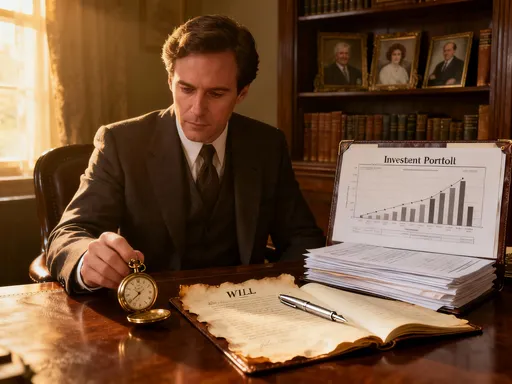
How I Upgraded My Financial Game Through Skill Training
What if the best investment you could make wasn’t in stocks or real estate—but in yourself? I used to chase quick returns, only to hit dead ends. Then I shifted focus: building real financial skills through intentional training. It changed everything. No hype, no get-rich-quick schemes—just practical knowledge that compounds over time. This is how upgrading my abilities transformed my financial mindset, decisions, and long-term outcomes. What began as a quiet commitment to learning soon revealed itself as the most reliable wealth-building strategy I’ve ever used. Unlike market swings or economic trends, this kind of growth stays with you, adapts with you, and continues paying dividends long after the initial effort.
The Wake-Up Call: When Chasing Money Stopped Working
For years, I believed that the solution to every financial challenge was to earn more. If I could just land a higher-paying job, start a side hustle, or find a passive income stream, then my money problems would vanish. This mindset led me down a path of constant effort without lasting results. I worked longer hours, took on freelance gigs, and even experimented with online schemes promising fast returns. Yet, despite the extra income, my savings remained stagnant, my stress levels rose, and my sense of control over money eroded. I was earning more, but I wasn’t managing better.
The turning point came after a financial loss that cut deeper than expected—not just in dollars, but in confidence. I had invested in what seemed like a promising opportunity, lured by testimonials and bold projections. I didn’t fully understand the underlying mechanics, but I told myself I was being bold, taking risks like successful people do. When the investment failed, I lost a significant portion of my emergency fund. That moment forced a hard conversation with myself: What did I actually know about money? How much of my financial behavior was based on emotion, assumption, or imitation rather than understanding? The truth was uncomfortable—I lacked the foundational skills to make informed decisions.
That experience became a wake-up call. I realized that no amount of income could compensate for financial illiteracy. Without the ability to assess risk, interpret financial information, or plan strategically, more money only amplified poor habits. I was like someone handed the keys to a high-performance car without knowing how to drive. The danger wasn’t in moving forward—it was in moving forward blindly. From that point, I made a quiet but firm decision: I would stop chasing money and start building financial competence. This wasn’t about becoming a financial expert overnight, but about developing the ability to make smarter, calmer, and more intentional choices.
Skill Training as a Financial Strategy: Beyond the Hype
Most people think of skill development as something tied to career advancement—learning a new software, earning a certification, or improving public speaking. Rarely is it framed as a personal finance strategy. But I began to see financial education not as a side activity, but as a core component of wealth building. Unlike stocks or real estate, which can lose value, knowledge appreciates quietly and consistently. It doesn’t require market timing, and it can’t be taken away by economic downturns. Once you understand a concept like compound interest or cash flow management, it stays with you, shaping every financial decision you make from that point forward.
I started treating my financial education like an investment portfolio—one that required diversification, regular contributions, and patience. I explored free online courses on budgeting, enrolled in a behavioral finance workshop, and dedicated time each week to reading about long-term financial planning. What surprised me was how quickly small insights began to change my behavior. For example, learning about emotional spending patterns helped me recognize when I was shopping to cope with stress. Understanding the real cost of high-interest debt motivated me to prioritize paying it down, not just minimum payments.
The real power of skill training lies in its compounding effect. Each new concept built on the last, creating a framework for better judgment. I stopped relying on tips from social media influencers or making decisions based on fear of missing out. Instead, I developed a personal set of financial principles grounded in evidence and experience. This shift didn’t bring overnight riches, but it brought something more valuable: confidence. I began to trust my own analysis, ask better questions, and make decisions aligned with my goals rather than market noise. Skill training became my silent partner in wealth building—low profile, high impact, and always working in the background.
What Financial Skills Actually Move the Needle
Not all financial knowledge is equally useful. In the beginning, I wasted time on topics that sounded impressive but had little practical value—complex derivatives, speculative trading strategies, or get-rich-quick frameworks. These often came with jargon that masked their lack of real-world applicability. Over time, I learned to focus on skills that directly influenced my day-to-day financial health and long-term security. These were not flashy, but they were foundational.
One of the most impactful skills was understanding compound interest—not just as a mathematical concept, but as a behavioral tool. I realized that starting small and staying consistent could yield significant results over time. This insight changed how I approached saving. Instead of waiting to have a large sum to invest, I began automating small contributions to my retirement account. I also learned to track my net worth regularly, which gave me a clear picture of my financial progress beyond just bank balances. Seeing the numbers grow—slowly but steadily—reinforced my commitment.
Another essential skill was distinguishing between needs and lifestyle inflation. As my income increased, so did the temptation to upgrade my lifestyle—bigger apartment, newer car, more dining out. Without awareness, these choices can silently erode financial progress. By aligning my spending with my values, I was able to make intentional choices. For example, I decided that financial security and family time were more important than luxury possessions, so I prioritized saving and paid off debt instead of financing a new car.
Investment literacy was another game-changer. I didn’t need to become a stock picker, but I did need to understand basic principles like asset allocation, diversification, and fee structures. Learning how expense ratios affect long-term returns helped me choose lower-cost index funds over high-fee alternatives. These decisions didn’t make headlines, but they saved me thousands in lost returns over time. The real return on these skills wasn’t just financial—it was emotional. I gained peace of mind knowing I had a plan, even when markets fluctuated.
Building a Personal Financial Learning Plan
Once I committed to improving my financial skills, I knew I needed a structured approach. Random learning wouldn’t be enough. I designed a personal learning plan that matched my goals, schedule, and learning style. I started by identifying the areas where I felt weakest—budgeting, debt management, and retirement planning—and set specific, measurable objectives. For example, my first goal was to create a zero-based budget and stick to it for three months. The next was to build a six-month emergency fund. Each goal came with a learning component: reading a book, completing a course, or consulting a trusted resource.
I prioritized free and low-cost resources to keep the barrier to entry low. Public libraries, reputable financial websites, and community education programs offered high-quality materials without requiring a large financial investment. I also joined online forums where people shared experiences and asked questions. These communities provided both information and encouragement. Over time, I moved to more advanced topics, such as tax-efficient investing and estate planning basics, always ensuring I had a solid grasp of the fundamentals before moving forward.
Consistency was key. I treated learning like a habit—something to be done regularly, not just when I felt motivated. I set aside thirty minutes each week for financial study, just as I would for exercise or meal planning. I also found an accountability partner, a friend who was working on similar goals. We met monthly to review progress, share challenges, and celebrate wins. This simple practice kept me on track and made the journey feel less isolating.
Mistakes were part of the process. I misclassified expenses in my budget, underestimated some costs, and occasionally slipped back into old habits. But instead of seeing these as failures, I treated them as feedback. Each misstep taught me something new about my behavior or the system I had built. Over time, my confidence grew—not because I had mastered everything, but because I had learned how to learn. That, I realized, was the most valuable skill of all.
Turning Knowledge into Action: From Theory to Real Results
Knowledge only becomes powerful when it’s applied. I could have read every personal finance book on the market and still remained stuck if I didn’t take action. So, I started small. I revised my budget using the envelope system for discretionary spending, which helped me stay within limits without feeling deprived. I set up automatic transfers to my savings and investment accounts, ensuring that saving happened before I had a chance to spend. These small changes, rooted in what I had learned, began to shift my financial trajectory.
One of the most significant moments came when I reviewed my retirement account. Before my training, I had accepted the default investment options without question. After learning about asset allocation and fees, I analyzed my portfolio and discovered that I was paying high management fees for underperforming funds. I switched to low-cost index funds, which better aligned with my risk tolerance and long-term goals. That single adjustment didn’t make me rich, but it positioned me to keep more of my returns over time.
Another breakthrough was learning to read financial product disclosures. I once considered signing up for a high-yield savings account advertised online, but after studying how to evaluate terms and conditions, I noticed hidden fees and withdrawal restrictions. I walked away and found a better option with a reputable bank. That moment of clarity—of being able to protect myself with knowledge—was empowering. It wasn’t about being cynical or avoiding all risk, but about making informed choices.
Over time, applying what I learned built momentum. Each successful decision reinforced my confidence. I began to view financial challenges not as threats, but as problems to be solved. I negotiated a lower interest rate on my credit card, refinanced my car loan, and optimized my insurance coverage. These weren’t dramatic moves, but they added up. The real transformation was internal: I no longer felt at the mercy of financial systems I didn’t understand. I had tools, and I knew how to use them.
Risk Control: The Hidden Benefit of Financial Literacy
Most people associate financial skills with making money, but their most valuable function is often protection. Before my learning journey, I had no real framework for evaluating risk. I followed trends, trusted sales pitches, and made decisions based on emotion. I didn’t know how to ask the right questions or spot warning signs. That changed as I developed financial literacy. I began to see risk not as something to fear, but as something to assess and manage.
I learned to identify red flags—promises of guaranteed returns, pressure to act quickly, complex fee structures hidden in fine print. I developed a habit of pausing before making financial decisions, asking myself: What are the costs? What could go wrong? Is this aligned with my goals? These simple questions prevented me from making several costly mistakes. For example, I avoided a “limited-time” investment offer that sounded too good to be true—because I had learned that it probably was.
I also built systems to reduce emotional decision-making. I automated savings, set up alerts for unusual account activity, and created clear guidelines for when to spend, save, or invest. These systems acted as guardrails, keeping me on track even during stressful times. When the market dipped, I didn’t panic and sell. Instead, I reviewed my plan, confirmed my asset allocation, and stayed the course. This wasn’t blind confidence—it was informed calm, rooted in understanding.
Financial literacy gave me the ability to say “no” with confidence. I no longer felt pressured to keep up with trends or social expectations. I could decline high-pressure sales offers, avoid lifestyle inflation, and focus on what truly mattered to me. This kind of control didn’t come from wealth—it came from knowledge. And that knowledge became my most effective risk management tool, protecting not just my money, but my peace of mind.
The Long-Term Payoff: Sustainable Growth Over Short-Term Gains
Looking back, the most profound change wasn’t in my net worth—it was in my mindset. Skill training taught me that real financial success isn’t about speed, luck, or access to exclusive opportunities. It’s about consistency, understanding, and patience. I no longer measure progress by sudden windfalls or viral investment wins. Instead, I focus on steady improvement—small decisions made well, habits maintained over time, and knowledge deepened through practice.
This approach doesn’t generate headlines or social media buzz. It won’t make you a millionaire overnight. But it builds something far more valuable: lasting financial security. I’ve learned that wealth isn’t a destination; it’s a byproduct of daily choices guided by clarity and purpose. Every new skill I’ve acquired has added another layer to my financial foundation, making it stronger and more resilient.
Today, I continue to learn. I explore new topics, revisit old ones, and refine my strategies as my life changes. I share what I’ve learned with family and friends, not as an expert, but as someone who has walked the path and seen the results. The journey hasn’t been perfect, but it has been transformative. I’ve discovered that the best investment I ever made wasn’t in a stock, a property, or a business—it was in myself. And that, more than any number in a bank account, defines true financial success.