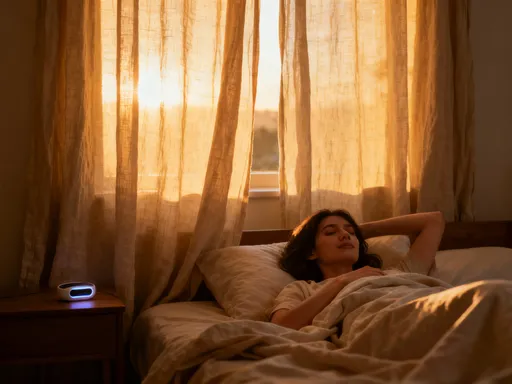
More than alerts: Motion sensors that quietly safeguard my family’s everyday well-being
You know that moment when you’re juggling work, kids, and aging parents—and you just wish you could be in two places at once? I felt the same—until motion detection devices became my silent allies. They don’t shout for attention, but every day, they help me sense a stumble, notice a missed routine, or simply know everyone’s moving as usual. It’s not about surveillance—it’s about peace of mind, wrapped in quiet technology that cares. These little sensors don’t replace human connection; they protect it by giving me just enough information to stay present, even when I’m not physically there. And honestly, that small shift has changed everything.
The Quiet Worry No One Talks About
There’s a kind of worry that doesn’t make headlines or show up in parenting guides. It’s the kind that hums in the background while you’re folding laundry, answering emails, or trying to fall asleep. For me, it started when my mom began living alone again after my dad passed. She’s strong—always has been—but I’d catch myself staring at my phone during meetings, wondering: Has she gotten up for breakfast yet? Or when my youngest was recovering from surgery, I’d lie awake thinking, Is he moving around enough? Is he in pain and not telling me?
It wasn’t fear, exactly. It was love showing up as quiet concern. And I realized I wasn’t alone. So many of us are stretched between responsibilities—caring for children, aging parents, ourselves—and we carry this invisible weight. We want our people to be independent, but we also want to know they’re safe. That tension is real. And it’s exhausting. I didn’t want to call every hour. I didn’t want to hover. But I did want to know—without asking—if things were okay. That’s when I started looking for a gentler way to stay connected. Something that wouldn’t feel like monitoring, but like caring from a distance.
I didn’t want cameras. I didn’t want constant notifications. What I needed was reassurance—simple, subtle, and respectful. And that’s how I found motion sensors. Not the kind that go off when a leaf blows by, but smart ones that learn rhythms. That notice patterns. That help you see the story behind the movement.
How a Simple Sensor Became Our Home’s Gentle Guardian
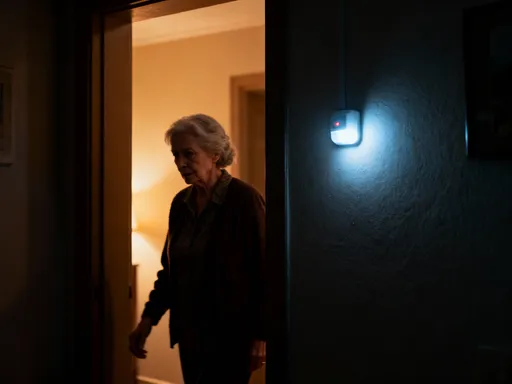
I’ll admit, when I first heard about motion sensors, I pictured security systems and flashing lights. But the ones I ended up using are nothing like that. They’re small—about the size of a credit card—and stick easily to the wall. I placed one in the hallway outside my mom’s bedroom, another near the kitchen entrance, and one by the front door. My son has one in his room, just near the door, to gently track morning and evening routines.
The beauty is in how quietly they work. They don’t record video. They don’t send alerts for every little motion. Instead, they learn what normal looks like. My mom usually gets up around 7:15 a.m., walks to the kitchen, and starts the coffee. The sensor picks up that pattern over time. If she’s up and moving, I see a soft green checkmark in the app. Nothing. No buzz, no alarm. But if she hasn’t moved by 9:00 a.m.—which is unusual—the app sends a quiet notification. Not a siren. Just a nudge: “No movement detected in the morning.”
One winter morning, that nudge came through. I was in a meeting, but my heart jumped. I stepped out, called her, and she answered slowly. Turns out, she’d slipped on the rug by her bed and was lying there, embarrassed and a little sore. She didn’t want to bother anyone. But because the sensor noticed what I couldn’t, I was able to get her help right away. That moment changed everything for me. It wasn’t about catching danger—it was about catching care.
These sensors don’t take over. They don’t make decisions. They just hold space for attention. And in a world where we’re always rushing, that small pause—Did she get up? Is he home?—can be the difference between worry and wisdom.
Beyond Security: Watching for What Really Matters
We often think of motion sensors as tools for catching intruders. But in my home, they’ve become tools for catching wellness. Movement is one of the most honest signals we have. When someone walks with their usual pace, opens the fridge at the same time, or moves through the house like they always do, it tells a story of stability. But when that rhythm shifts—when steps slow down, routines skip, or the kitchen stays dark too long—it can be an early whisper of something bigger.
Take my son’s recovery from appendicitis. For days, he was healing at home, and I was trying to balance work and caregiving. The sensor near his room showed that he wasn’t getting up as often as usual. Not alarming, but different. One evening, the app noted no movement for nearly five hours. I checked on him and found he wasn’t feeling well, but hadn’t wanted to interrupt me. We adjusted his meds, got him some soup, and I stayed close that night. Without that small signal, I might have missed it.
It’s not about diagnosing. It’s about noticing. These sensors don’t replace doctors or conversations. But they do give us a gentle heads-up when something’s off. For aging parents, a sudden drop in kitchen activity might mean they’re not eating well. For teens, a change in morning movement could signal fatigue or stress. The data isn’t cold or clinical—it’s contextual. When you know someone’s normal, even a tiny deviation can speak volumes.
And the best part? It’s passive. No wearables to charge, no buttons to press. Just life, moving as it does—quietly observed, gently understood.
Making It Work for Real Life (Not Just Tech Enthusiasts)
I’ll be honest—I’m not a tech whiz. I don’t build smart homes. I don’t even know how to code. But setting up these sensors was easier than I expected. The brand I chose had a simple app, clear instructions, and customer support that actually answered in plain English. I didn’t need to rewire anything. I didn’t need a degree in engineering.
Here’s how I did it: First, I picked high-traffic but private areas—hallways, entryways, the kitchen. Places where movement naturally happens, but where no one feels watched. I avoided bedrooms and bathrooms, not because the sensors see anything (they don’t), but because comfort matters. Then, I mounted them about six feet high, facing the path people usually walk. The app guided me through pairing each sensor via Bluetooth, and within minutes, they were learning.
Of course, there were hiccups. Our cat, Luna, loves to jump on the hallway shelf right under the sensor. At first, it kept triggering false alerts—like someone was pacing at 2 a.m. But the app lets you adjust sensitivity. I lowered it slightly, and now it only registers human-sized movement. Problem solved. Another time, I placed a sensor too close to a heater, and the rising warm air set it off. A quick reposition fixed that. These weren’t failures—they were learning moments. And each one made the system better.
The key is starting small. You don’t need a sensor in every room. Just one or two in key areas can make a big difference. And most systems let you set custom routines—like “morning check” or “bedtime window”—so you only get alerts when it really matters. It’s not about being connected to every second. It’s about being connected to the right ones.
Respecting Privacy While Staying Connected
I know what you might be thinking: Isn’t this a bit invasive? I asked myself the same thing. Especially when it came to my mom. She values her independence deeply. So before I installed anything, we talked. Not as a caregiver and patient, but as mother and daughter. I explained how the sensors work—no video, no audio, just motion patterns. I showed her the app and let her see what data was collected. And I gave her full control. She can disable notifications, adjust settings, or remove the sensor anytime.
What surprised me was how much she appreciated it. “It’s like you’re looking in on me,” she said, “but without actually walking in.” She didn’t feel watched. She felt cared for. And that distinction matters. Privacy isn’t just about data—it’s about dignity. These sensors don’t capture faces or conversations. They don’t judge. They simply reflect movement. And because we set boundaries together, the technology became a bridge, not a barrier.
With my teenage daughter, we had a similar conversation. She was skeptical at first. “You’re not going to spy on me, are you?” she asked. I laughed and said, “The only thing this sees is whether you’ve left your room before noon on a Saturday.” We set it up together, chose the location, and agreed on what kind of alerts made sense. Now, it’s just part of our rhythm. If she’s home late from practice and the sensor shows she’s moving around, I know she’s safe. If not, I’ll text: “You okay?” Simple. Human. Supported by tech, not replaced by it.
Technology should never erode trust. But when used with intention, it can actually deepen it. Because now, instead of constant check-ins, we have quiet confidence. And that gives everyone more space to just be.
Small Signals, Big Peace of Mind
The most powerful changes are often the quietest. Since adding motion sensors, I’ve noticed something subtle but profound: I worry less. Not because I’m less loving, but because I’m less uncertain. When I’m at work and see that green checkmark—my mom’s up, the kids are home, the house is moving as it should—I can breathe. I don’t need to call. I don’t need to interrupt. I can stay focused, knowing that if something were off, I’d know.
It’s not just about emergencies. Sometimes, the absence of alerts is the greatest comfort. Like the evening I saw my mom’s kitchen light up at 7 p.m.—right on schedule. Or when my son’s sensor showed he’d been up and moving all day, even though he didn’t say much at dinner. Those moments don’t make headlines, but they fill my heart.
And when an alert does come, it’s not a crisis—it’s a chance. A chance to say, “Hey, I noticed you’re up late. Everything okay?” or “You haven’t moved in a while—need anything?” It’s not surveillance. It’s solidarity. It’s love showing up in the form of a gentle reminder that someone is paying attention.
I’ve stopped feeling guilty for not being everywhere at once. Because now, I realize I don’t have to be. These small devices don’t replace my presence. They extend it. They let me care in a way that’s calm, consistent, and kind.
A Calmer Home, One Movement at a Time
Looking back, I never thought a little motion sensor could change the way I feel about home. But it has. It hasn’t made life perfect—nothing can. But it has made it calmer. More connected. More grounded. I’m not chasing reassurance anymore. I’m living with it.
Technology often promises to do more—to be louder, faster, smarter. But the tools that truly serve us are the ones that do less. The ones that fade into the background and let life shine. These sensors don’t buzz. They don’t flash. They don’t demand attention. They simply notice. And in that quiet noticing, they give us something rare: peace.
Peace that my family is safe. Peace that I’m not missing what matters. Peace that I can be fully present in my work, my moments, my self—because I know the people I love are moving through their day, just as they should.
If you’re like me—juggling, caring, wishing you could be in two places at once—know this: you don’t need to do more. You don’t need to check more. You just need a little help seeing what’s already there. Sometimes, the most powerful way to love someone is to simply know they’re moving through the world, one quiet step at a time. And with a little help from gentle tech, that knowledge is no longer out of reach. It’s right there, in the stillness, waiting to be noticed.