What If Your Video Chat App Could Make Travel Easier Than Ever?
Imagine getting lost in a foreign city, not knowing the language, but still finding your way—smiling—because someone back home was guiding you through a live video call. That’s the quiet magic of today’s video chat apps. They’re no longer just for family catch-ups or work meetings. When you travel, they can turn your phone into a window of support, connection, and real-time help—making even solo trips feel shared, safer, and surprisingly smooth. You’re not just sending a text or a photo. You’re showing someone your world, exactly as you see it, and letting them walk beside you—even from thousands of miles away.
The Traveler’s Hidden Struggle: More Than Just a Language Barrier
Let’s be honest—traveling is beautiful, but it can also be exhausting. You plan for weeks, pack carefully, and dream of sunsets over ancient ruins or quiet mornings in a café with perfect coffee. But once you arrive, the little things start to pile up. The train ticket machine only has buttons in a language you can’t read. The menu at dinner has no pictures, and the waiter is already waiting. You stand at a crosswalk, unsure if the sign means “don’t walk” or “cross quickly.” These moments aren’t dramatic, but they wear you down. And the hardest part? You don’t want to admit it. You smile, nod, and figure it out—but inside, you’re wishing for just one familiar voice.
I remember my first trip to Japan. I had studied a few phrases, downloaded translation apps, and felt ready. But when I got off the train in Kyoto and realized I had no idea which exit to take, I froze. The signs were a blur of kanji, and the crowds moved with confidence I didn’t have. I stood there, suitcase in hand, feeling more alone than I had in years. That’s when I called my sister. Not to complain—just to hear a friendly voice. But as soon as I turned on the video and showed her what I was seeing, everything changed. She asked me to pan the camera slowly. We found a map on the wall. She spotted the English word “Exit” near a symbol I hadn’t noticed. In less than two minutes, I was on my way. It wasn’t magic. It was connection.
What so many of us don’t talk about is how much emotional weight comes with being “the traveler.” We’re expected to be brave, curious, and always in control. But the truth is, even the most experienced travelers have moments of doubt. And those moments don’t have to be faced in silence. The beauty of modern video chat is that it doesn’t just solve problems—it shares the emotional load. You’re not asking someone to fix everything for you. You’re inviting them to be part of your journey, even if they’re sitting on their couch in their pajamas.
From Living Room to Street Corner: How Video Calls Go Mobile
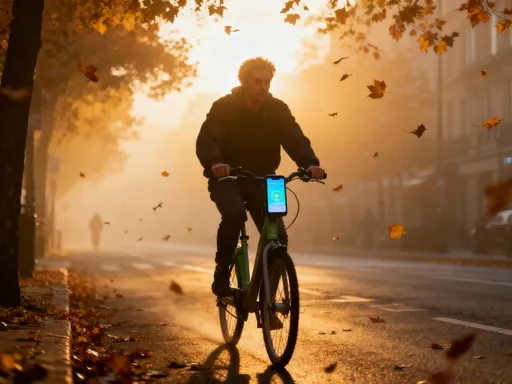
Not long ago, video calls were something you did at home, sitting at a desk with a webcam. You needed strong Wi-Fi, good lighting, and a quiet room. But today’s smartphones and mobile networks have changed all that. With 4G and 5G, you can make a clear video call from a taxi, a train platform, or even a quiet corner of a park halfway up a mountain. Apps like FaceTime, Zoom, and Google Meet are designed to adapt to changing conditions—lowering resolution if the signal drops, switching between front and rear cameras in a tap, and even working with headphones for privacy in public spaces.
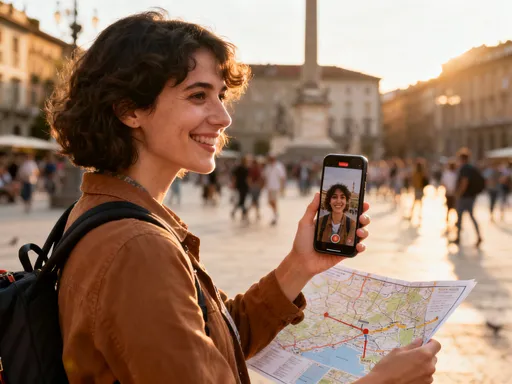
Think about how powerful that is. You’re no longer limited to describing what you see. You can show it. You can turn your phone into a shared set of eyes. That means your mom can help you read a bus schedule in Rome. Your best friend can confirm whether that street market in Marrakech looks safe. Your husband can guide you through a complicated subway transfer in Seoul, pointing at signs and counting stops with you. The phone isn’t just a tool for calling anymore—it’s a window. And that window can bring someone you trust right into the middle of your adventure.
I was in Lisbon once, trying to find a small family-run restaurant my cousin had told me about. I had the address, but the streets were narrow and winding. After going in circles for ten minutes, I stopped, took a breath, and called her. I switched to the rear camera and slowly turned around, showing her the street signs, the shop names, the color of the buildings. She recognized a bakery she’d visited years before. “Turn left at the blue awning,” she said. And just like that, I was back on track. It wasn’t just about directions. It was about feeling like I wasn’t alone in the maze.
This shift—from static calls to mobile, real-time visual sharing—has quietly transformed what video chat can do. It’s no longer about scheduled check-ins. It’s about spontaneous, in-the-moment support. And that makes all the difference when you’re navigating a world that doesn’t speak your language, literally or culturally.
Real-Time Translation, Real-Life Support: A New Kind of Travel Companion
We’ve all used translation apps. They’re helpful, but they can be hit or miss. Sometimes the translation is awkward, sometimes it misses context, and sometimes it just can’t capture tone. But when you’re on a video call with someone who speaks the language, you get something much richer. You’re not just getting words—you’re getting understanding. Your sister sees a menu item and says, “That’s a spicy sausage dish—probably not what you want if you’re sensitive to heat.” Your dad hears a conversation at the next table and says, “They’re talking about the weather. It’s going to rain later—don’t forget your umbrella.” That kind of real-time, contextual help is something no app can fully replace.
And it’s not just about language. It’s about cultural clues. In many countries, how you order food, how you greet someone, or even how you hold your hands can send subtle messages. A friend on video can help you read those signals. I was in Vietnam once, trying to buy fruit from a street vendor. I pointed at a basket and said the word I’d practiced: “Bao nhieu?” How much? But the woman smiled and said something back I didn’t understand. I quickly called my neighbor, who’s fluent in Vietnamese. I held the phone toward the vendor, and within seconds, my neighbor explained: “She’s asking if you want it peeled. That’s why she’s smiling.” A tiny moment, but it made me feel more confident, more connected, and less like a tourist who didn’t belong.
There’s also something deeply comforting about hearing a familiar voice confirm what you’re seeing. When you’re in an unfamiliar place, your brain works overtime trying to make sense of everything. A video call acts like an anchor. It doesn’t take you out of the experience—it grounds you in it. You’re still exploring, still learning, but with a safety net. And that safety net isn’t made of rules or apps. It’s made of trust, love, and shared history.
Some people worry that relying on video calls while traveling means you’re not “really” experiencing the place. But I’d argue the opposite. When you’re less stressed about the basics—finding your way, ordering food, understanding signs—you have more mental space to enjoy the beauty around you. You can notice the way sunlight hits a stone wall, the sound of a street musician’s song, the smell of fresh bread from a corner bakery. Technology, in this case, doesn’t distract from the moment. It protects it.
Guided by Someone You Trust: Redefining Travel Confidence
Confidence isn’t about doing everything alone. It’s about knowing you can handle whatever comes your way—with or without help. And for many of us, that confidence grows when we know we’re not completely on our own. I’ve seen my daughter use FaceTime to walk through an airport in Germany, showing her dad the departure board, the gate numbers, the signs for baggage claim. He guided her step by step, calm and clear. She wasn’t lost. She was learning. And each time she did it, she needed less help.
One of my closest friends, Maria, used a video call during a medical visit in Spain. She’d hurt her ankle hiking and needed to see a doctor. She was nervous—not just about the pain, but about explaining her symptoms in a language she wasn’t fluent in. So she called her sister, who speaks fluent Spanish. She held the phone so the doctor could see her, and her sister translated not just the words, but the tone, the urgency, the questions. Afterward, Maria said, “I didn’t feel scared. I felt taken care of.” That’s the power of having someone you trust in your pocket.
These moments don’t just solve problems. They build emotional resilience. They remind us that asking for help isn’t weakness—it’s wisdom. And when that help comes through a video screen, it feels personal, immediate, and kind. It’s not a robot. It’s not a script. It’s your mom, your sister, your best friend—the people who know your voice, your fears, your sense of humor. They’re not just helping you navigate a city. They’re helping you feel like yourself, even when you’re far from home.
And let’s not forget—travel can be tiring. Jet lag, unfamiliar food, constant decision-making. It wears on you. A quick video call can be more refreshing than a nap. Seeing a familiar face, hearing a laugh, sharing a small victory—“I found the hotel!”—it recharges your spirit. It’s not about avoiding the challenges of travel. It’s about facing them with a little more lightness, a little more joy.
Teaching Without Teaching: How Video Calls Become Skill Boosters
Here’s something I didn’t expect: the more I used video calls while traveling, the more I learned. Not just facts, but skills. I started to recognize common words on signs—“entrada,” “salida,” “toilet.” I picked up phrases just by hearing my sister say them during a call. I began to notice patterns in how menus were organized. I got better at reading body language and tone. None of this was planned. It just happened, naturally, through repeated exposure and real-life practice.
That’s the quiet power of learning in context. When you’re in a real situation—ordering coffee, asking for directions, checking into a hotel—and someone guides you through it, the lessons stick. You’re not memorizing flashcards. You’re living the language, the culture, the rhythm of daily life. And because it’s low-pressure (you have backup), you’re more willing to try, to make mistakes, to keep going.
I’ve watched my niece grow from someone who needed constant help on trips to someone who only calls when she wants to share something beautiful. “Look at this view!” she’ll say, panning the camera across a mountain range. The shift happened gradually. Each call taught her something—how to read a train schedule, how to confirm a reservation, how to ask for help politely. Now, she travels with quiet confidence. She still calls, but not because she’s stuck. Because she wants to include someone she loves.
That’s the real gift of this technology. It doesn’t make us dependent. It makes us capable. It gives us space to grow at our own pace, with support when we need it. And over time, we find that we don’t need the help as often. Not because the technology failed us, but because it succeeded. It helped us become the travelers we wanted to be—curious, brave, and connected.
Smart Tips for Seamless Travel Calls: Making It Work in Real Life
Of course, video calls don’t always go perfectly. Sometimes the signal drops. Sometimes the lighting is bad. Sometimes the person on the other end is busy. But with a little planning, you can make these calls work smoothly. First, let your support person know you might call. A simple text like, “I’m landing in Paris tonight—might need help with the metro” gives them time to be available. And set expectations: “I might only need a minute,” or “I’ll call when I’m at the station.”
Next, prepare for low connectivity. Download offline maps, save important numbers, and carry a portable charger. If you know you’ll be in a remote area, send a message ahead: “I’ll be hiking all day, but I’ll check in tonight.” And if the call does drop, don’t panic. Send a quick text when you can: “Made it to the hotel—will call tomorrow.”
Also, be mindful of time zones. A 9 a.m. call for you might be midnight for your sister. A quick “Is now a good time?” shows respect and keeps the connection strong. And remember—video calls are a tool, not a crutch. There’s beauty in figuring things out on your own. Let yourself wander, explore, get a little lost. Save the calls for moments when you truly need support, or when you want to share something special.
Finally, protect your privacy. In public places, use headphones. Be aware of your surroundings. And if you’re in a sensitive situation—like a medical visit—ask permission before recording or sharing audio. Technology should serve you, not expose you.
More Than a Call: Reimagining Connection in the Age of Mobile Tech
When I think about how much travel has changed in the past decade, it’s not the faster flights or fancier hotels that impress me most. It’s the quiet revolution of connection. We used to write postcards. Then we sent texts. Now we share live views of our journeys with the people who matter most. That shift isn’t just technological. It’s emotional. It means we can explore the world without leaving our relationships behind.
Video chat apps have become invisible travel companions—always there, always ready, never judgmental. They don’t carry luggage, but they carry love. They don’t book hotels, but they ease anxiety. They don’t speak every language, but they bring someone who does right to your side. And in doing so, they make travel not just easier, but richer, warmer, and more human.
The future of travel isn’t about going farther or faster. It’s about bringing more of who we are—and who we love—into every journey. It’s about knowing that even when you’re standing on a quiet beach in Greece or walking through a bustling market in Bangkok, you’re not really alone. You can turn on your phone, make a call, and let someone see what you see. That moment of connection doesn’t diminish the adventure. It deepens it. Because the best trips aren’t just about the places you go. They’re about who you get to share them with—even if they’re just a video call away.